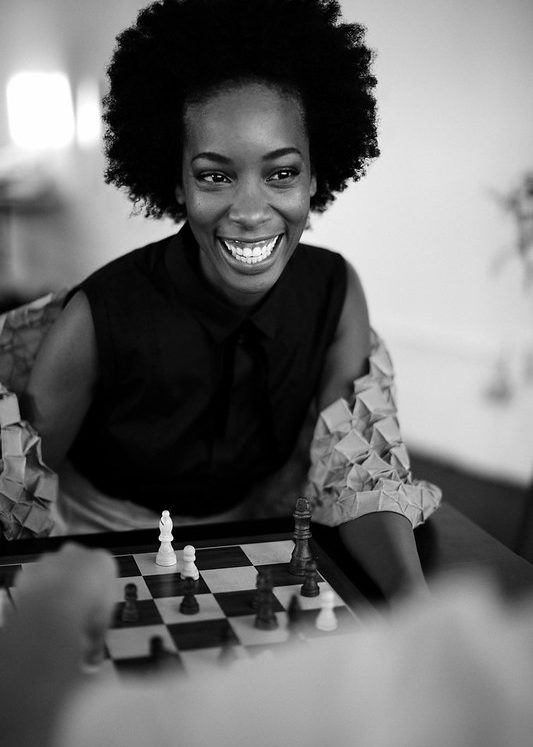

Late Bloomer

Late Bloomer | Darling Magazine

“I hope you will go out and let stories happen to you, and that you will work them, water them with your blood and tears and your laughter till they bloom, till you yourself burst into bloom.” -American Poet Clarissa Pinkola Estes

“You are just a late bloomer,” my mother said to me from her side of the living room, where she carefully sipped a small cup of coffee. She was, of course, referring to the challenges and insecurities I was experiencing having returned to college at the age of thirty. “So, you’ve taken awhile to figure out what you want to do,” she continued, “Lots of people are that way!”

In principle, how could I not agree with my mother? Of course we don’t all travel at the same pace and fewer still manage to find their passions and career on the first try. Even so, I could not help thinking there was a fast-paced train traveling by that I simply missed a long time ago. I would often envision myself chasing that train into a tunnel only to watch it disappear from sight.

I like to think of that locomotive being success, social networking, and fame. The era of Facebook has left us drowning in information every second of the day. In addition, the never-ending stream of successful imagery our peers share with the world can be off-putting rather than inspirational at times. TIME magazine featured a report earlier this year claiming that Facebook leaves many people feeling, “lonely, frustrated or angry” (Sifferlin, 2013). Our dependency on social networking sites can sometimes diminish our feeling of worth and leave our contentment rattled by the apparent lovely lives of others.

I will confess that after spending far too much time on my computer, I often felt that my “in progress” dreams did not have value. I closed my laptop feeling paralyzed by the gravity of other people’s talent bombarding me on blogs, Facebook, Instagram, and the like. I continued to allow myself to experience that until it began choking me of my ability to grow into who I was made to be. Perhaps the envy of others’ successes, beauty, or careers has left each of us in want from time to time. The question remains: In the fame obsessed, social network-driven, and competitive world we live in…what is a late bloomer to do? Is there a place for her at all?

The famous proverb says, “Seeds of discouragement will not grow in a thankful heart.” The author of this graceful statement is unknown, an irony when you consider how focused our culture is on crediting good words and deeds to the deserving party. Could the mystery author who penned this quote be onto something? Merriam Webster defines “thanksgiving” as “the act of giving thanks,” “a prayer expressing thanks,” and “a public acknowledgement or celebration of divine goodness.” It’s a beautiful thought, thanksgiving, but how do we practice it in daily life? Here are some steps that helped me:

  1. Start the day by writing down three things you are grateful for (nothing is too big or small).
  2. Write down three small goals that propel you towards your ultimate dream. Give yourself a practical deadline to meet these goals. Be flexible and kind to yourself when determining this.
  3. At some point throughout the week, encourage or compliment somebody on his or her success and talent. Offer this free of comparing it to yourself or anyone else.
  4. Allow yourself to reflect on your week and experience quiet away from the noise of your phone and computer.

After just one week of trying these simple steps I found my burden lighter and not so bound by the chains of comparison and failure. Another week after that, I legitimately felt happy for other people and their accomplishments. I began to experience the wonder of appreciating the beauty people create and the fingerprints they leave on the world through their careers and gifts. In the midst of this, seeds of excitement regarding my own dreams started to take shape like they hadn’t in years. I still have a long way to go in my discipline of thanksgiving, but I am assured of the simple truths I have learned thus far.

We can forge ahead motivated by the desire for success and fame, and perhaps even accomplish some of that. Or, in contrast, we can lament our current place in life and compare ourselves to others in sadness. Yet at our core, our souls long to connect with gratitude for our journey, no matter what part of it we find ourselves in. Without this connection, we will forever be bound by the chains of envy and insecurity. This spirit of thanksgiving will help us embrace more freedom, healing, and life-giving success than we could ever imagine.

Practicing a thankful heart has confirmed what our mothers, grandmothers, and mentors have always told us over a cup of coffee: Blooming late is better than never having bloomed at all. In fact, perhaps we bloom right when we ought to: at the perfect time.

Image via Tumblr

Values-Based Budgeting: Combining Values, Goals, and A Budget

Values-Based Budgeting: Combining Values, Goals, and A Budget | Darling Magazine

This is continued from Values-Based Budgeting: Identifying and Defining Goals and Values

Start with your values and goals. In a fresh new document, list your three values. Below each value, list 3 potential actionable goals. These can be a mix of things you already do, and things you’d like to do to further your values. Also try to create a mix of money-based goals (such as saving up for a trip) and life-based goals (such as visiting your parents outside of the city once a week—which will require extra gas money).

Now, combine these with your budget. You probably won’t be touching the Income and Fixed Expenses columns unless you get a promotion (congratulations!) or are able to talk the cable guy into a lower rate (good luck!). So for now we are dealing with the Discretionary Income.
A budget of $75 a week for groceries? Well, that’s boring, and doesn’t add anything to your life other than a number. But if you add the value that you want to buy as many locally grown vegetables each week, well, look at that! You’ve just directly added value to your life picture and your budget. Now, you can sew up a cute tote bag in 20 minutes, and enjoy your Saturday mornings at the farmer’s market. You’re killing a few birds with one stone—a fun sewing project, supporting farmers, eating healthy food, and entertainment for a Saturday morning! One of my favorite things to do!

An example of a goal would be, say, for instance, that last winter you really got the doldrums. Just like, really, really, got cabin fever/the blues/the mean reds and/or a stomach flu. All things that made you desperate to escape, but it wasn’t in the cards (and by that I mean, the budget). So start saving! Set a specific, measurable goal: I want to save $800 for a winter vacation next January. That means you have 10 months to save, so you need to shave off (or earn an extra) $80/month to achieve this goal.

Keep in mind that Discretionary Income is for saving and spending, so first things first: Create your savings goals before your spending goals.

Examples of Savings Goals

Emergency Fund: This is the cushion in case you lose your job, get sick, or need to make a major repair to the house immediately. Consider this a necessary savings goal.

  • Goal: Funnel a portion of your paycheck here automatically.
  • Value: Security

Paying Off Debt: This is technically spending money, but I consider it a savings goal because you aren’t spending the money for anything in the present; you are paying off the past.

  • Goal: To pay off debt sooner.
  • Value: Independence

Long-Term Savings: Setting goals for long-term savings such as a down payment on a house, a new car, college for your kids, etc.

  • Goal: Down payment on a house
  • Value: Family, Security, Independence

Short-Term Savings: Saving for things such as a new camera, a vacation to the Bahamas, a big birthday bash.

  • Goal: Save for Vacation
  • Value: Health, Happiness

Your own specifics will come into play here with actionable, measurable goals.

Examples of Spending Goals

Spending goals are not as easy to categorize, since they will usually involve spending more, spending less, or spending the same amount but juggling it between categories.

For instance: spend less on individual entertainment (use an actionable, measurable goal amount here) and spend more on community (for instance: taking old friends out to dinner once a month; purchasing books for and participating in a monthly book club).

Your value may be thrift, so clipping coupons in an effort to save money at the grocery store might be a great budgeting goal for you. Or perhaps one of your values is supporting local artists, so you decide to spend one evening a month going to the art gallery instead of the movie theatre.

Putting it All Together

Our values can inform our goals and budgets, and our goals and budgets can inform our values. We can tell the “GPS” of our budget that we want to spend less money on gas and ride our bikes more. We can tell it that we decide investing in microfinance is important to us, so we need to increase the payments on our debt so we can pay it off sooner and put that money towards our investment.

These are decisions we can see in our everyday life: every week when we pick up that CSA, or when we decide to take Friday afternoons off from work and use them volunteering at the after-school program. Most commitments and decisions in our lives affect both budget and values. Linking them makes budgeting easier and values and goals more prominent in your life.

Image via Wit + Delight

Values-Based Budgeting: Identifying and Defining Goals and Values

Values-Based Budgeting: Identifying and Defining Goals and Values | Darling Magazine

This is continued from Values-Based Budgeting: Budgeting Basics

You should have a pretty good idea of what you have spent for the past month. Don’t stress yet!

Now that we have the numbers, this is where we going gets a little bit tougher. Take a critical look at them. Do you notice that you spend a lot of money by not returning your Redbox movies on time? Or by paying for magazine subscriptions you never read? Library fines? ATM fees because you forget to go to the bank during the week? Make a list and then prioritize eliminating all of these wasted expenses. Do any of the numbers seem high to you? Try to whittle them down.

There are a lot of good tools online to help you with this. I especially love LearnVest’s online Money Center and Financial Bootcamps (these are amazing and free). You can also try Mint. Scour Crown Financial Ministries website (and books!) for some great strategies. Several of these connect with your phone so you can always keep an eye on your finances to decide if you really need a leopard print trench coat or not.

Now let’s get down to the heart of the issue. Why Budget?
A GPS is useless if it only knows where it is, and does not include maps and directions, just as a budget with only numbers is useless. When you combine a budget with your goals and values, you are telling the GPS where to go. You are punching in an address, you can add “Via Points,” you can change the setting from “Fastest Route” to “Most Direct Route” or you can avoid toll roads. In budget terms, you can save for college, or a trip. You can divert more money to your 401k right now or you might choose to invest some of your money. Now is the time to tell the GPS where to go…that is, to tailor the budget to your goals and values.

What are Values, Exactly?
Values are foundational principles that guide our lives and decision-making process. They can be things such as: Health, Happiness, Wealth, Thrift, Relationships, Love, Giving, etc. Values can change: when you’re young, you might value happiness and wealth (to pay off student loans!). As you grow and have a family, you may value health and thrift. It may be difficult at first to pinpoint your values, so take a look at your life as a whole and where you invest your time. Do you spend most of your time at work? You might highly value productivity, duty, or success. Do you spend a lot of time with friends? You might value community and relationships. There is no “right” amount of values to invest yourself in, but three is generally a good starting point.

What are Goals, Exactly?
Goals are actionable, measurable items that fit under your values; they are ways of manifesting your values in your daily life. A good goal should be actionable (one that has steps you can take to complete it), measurable (it has an end result that can tell you whether you completed it or not) and time-sensitive (based on a weekly, monthly, quarterly, or yearly result). For instance, if your value is community, volunteering at the soup kitchen one time a week is a good goal. There are steps you can take towards volunteering (find a local soup kitchen; contact them to set up a volunteer appointment, show up at the appointment and serve); and it is measurable (at the end of the month, did you go to the soup kitchen once a week?).

Stay tuned for Values-Based Budgeting: Combining Values, Goals, and A Budget…

Image via J.Crew and Cappuccinos

The Birch and The Bee

The Birch and The Bee | Darling Magazine

Here at Darling, we value the entrepreneurial spirit. That’s why we’re thrilled to share with you about The Birch and The Bee—a new venture by some friends of ours. Read on to learn more about who they are, what they do, and how you can get your hands on their amazing products…

Can you tell our readers about The Birch and The Bee?

Founded with the dual purpose of fun and quality craftsmanship at its core, The Birch and The Bee grew from a homespun project into a full line of jewelry. The creatures and objects that have found their way into the line are inspired by daydreams and travels and the adventure of daily life. The owl beckons you to a woodland trail, while the monster warns that danger lurks at every corner. The pair of cactus are a reminder of the constancy of the barren desert, and the camera begs you to take it all in. Each unique design celebrates the carefree spirit of creation and exploration.

The Birch and The Bee | Darling Magazine

Why did you choose to make your pieces out of wood?

While the elegance of precious metal and stone is undeniable, there is something comforting about wood. We use it to make luxurious furnishings, sturdy cutting surfaces, and delicate music boxes; so why not jewelry? That’s the question we found ourselves asking when The Birch and The Bee was born.

As a high-quality and renewable resource, wood is an ideal place for design inspiration to take shape. Its strength and rigidity protect it from harm, while its near weightlessness makes it perfectly wearable. The natural beauty of the wood grain and its color variation add depth and a sense of liveliness to the whimsical creatures and objects etched in its surface. By using a laser cutter to shade, etch and cut out each piece, we preserve the integrity and beauty of each hand-selected piece of wood. In this way, each ring and earring is created to be both a durable and playful adornment.

The Birch and The Bee | Darling Magazine

You currently have a campaign on Kickstarter to raise initial funds. Can you tell us more about that?

The Birch and The Bee is about collaboration, about bringing good things together to become even better. We are a group of good friends that have brought together imaginative vision, aesthetic direction, and technical wherewith-all to produce our line of accessories. Now we are just missing those final pieces to bring this project to life: enthusiasm and financial support.

By backing The Birch and The Bee, supporters can be in on the ground floor of this endeavor, and will have the opportunity to reserve accessories at a discounted price.

The Birch and The Bee | Darling Magazine

Where can our readers order your products?

Since we’re just starting out, we’re currently only selling our products through Kickstarter pledges. We currently have $604 of our $2,500 goal and the campaign ends on April 1. So, if you like our products, please swing by and make a pledge to help us bring this business to life!

The Birch and The Bee | Darling Magazine

Learn more about The Birch at The Bee at their Kickstarter page, or by visiting www.thebirchandthebee.com.

Values-Based Budgeting: Budgeting Basics

Values-Based Budgeting: Budgeting Basics | Darling Magazine

Money can be easily spent and easily forgotten. A numbers-based budget does not give back to your life unless you are in need of some eye-glazing reading material to get you to sleep. Combining your budget with your life values and goals creates a budget becomes relevant to you. It speaks into your life and actually helps you accomplish not only your money-based goals, but also your life-based goals.

Budgeting can be rather black and white. What comes in, what goes out, blah blah blah. But when you introduce the concepts of values and goals, a budget suddenly comes alive! You can see how it works into your whole life picture. You can see how you can use it, mold it, and shape it to align with your values and goals.

Some people have been budgeting since they got their first tooth fairy quarters. Others have this vague notion of what the word means, but no real foundation. Most people probably cringe when they hear the word. Let’s break it down: What exactly IS a budget?

A budget is a “GPS” for your money. It tells you where your money is coming from and where it is going. It can also tell you how you can use your money, should use your money, what to do if you want to “detour” for a bit and do something else with your money. A budget is the big picture as well as the details of your income, your outflow, and what’s left at the end of the month (hopefully!).

Getting started is easier than you might think. Print out your monthly statements for any and all debit/credit cards, and gather up receipts, your checkbook, and a calculator. Write down any cash transactions you remember from the past month, including ATM debits. Then, make a spreadsheet in Excel. We’ll start by getting an accurate picture of one full month.

  • On one side, list all Income you get each month in a column, and total it at the bottom.
  • On the other side, list all of your “non-negotiable” expenses, or your Fixed Expenses in one column and total it. Take your time to think hard about every expense…life is expensive, and the small things add up. Do you have to pay for laundry? Parking at your job? Do you still “cover” your roommates half of the TV bill, or your little brother’s cell phone on your “Family plan”? Find your car insurance bills, and divide that by 12 to figure out how much you pay each month (even if you don’t pay it monthly). Same with health insurance, renter’s insurance (which you have if you are renting your living space, right?!), and anything else you pay quarterly or annually.
  • Subtract the Fixed Expenses from the Income. A positive number means you have money you can use for “Discretionary Spending” (unnecessary things). A negative number means you are accruing debt each month.
  • Below these, list your Discretionary Spending. It is often helpful to further categorize this into “Entertainment,” “Health & Beauty,” and other relevant categories for your lifestyle. List everything else here, such as: Netflix, lattes, gym memberships, haircuts, entertainment, eating out, gifts, postage, donations, magazine subscriptions, music download & app purchases on your phone, etc. Go through your statements, receipts, and check payments, and make sure you put ALL the numbers into this spreadsheet in the appropriate column. Don’t forget to include any tithing and charitable giving. This is not meant to be a judgment; it is meant to be an honest picture of where your money goes. At this point, you aren’t making any changes, just putting it all down in writing.

Stay tuned for part two of the series, Identifying and Defining Goals and Values…

Image via A Well Traveled Woman

Time Saving Apps

Time Saving Apps | Darling Magazine

Life is busy, isn’t it? As women there is pressure to spin hundreds of plates at a time … never dropping one and spinning in style. Not only do we feel pressure from around us but much of it comes from it within. We care deeply about the things that we do, not wanting to give up one passion, responsibility or area of influence.

Wouldn’t it be nice to have some help?

Well, thanks to technology and our brilliant (although sometimes distracting) smart phones, help is right at our fingertips. Here are some time-maximizing apps that have given me an extra hand as I spin efficiently and with style…

1. Reminders
When I started my new job, I couldn’t sleep for weeks. There were names to remember and forms to fill out, responsibilities to take care of and emails to answer. All seemed equally important and all seemed equally as likely to slip away if I let my mind relax for even a moment. I made sticky notes and scribbled reminders on the back of my hands. I bought planners and made lists but nothing ever seemed to help.

There are tons of “reminders” apps, but I use the one provided on all Apple products. No matter your preference, it’s a great way to keep track of all of the moving parts, ensuring that not one plate gets dropped.

2. Evernote
Along the same lines, documents are incredibly hard for me to keep organized. I began using Evernote at the beginning of this year and it has become a staple. It’s an app that stores documents of all kinds, allowing you to sort them into notebooks that are as easy to search as your email. The best part is that it can sync with your phone or tablet, making sure you’re never without the information you need.

3. Mint.com
If you’re anything like me, budgeting isn’t your strong suit. Mint is a great way to compile all of your accounts, and an even better way to set some boundaries for how much you want to spend in each area of your life. It will remind you when your account is getting low or when bills need to be paid. It will also send you a friendly reminder when you’ve gone overboard buying shoes.

4. 30/30
Distraction is our biggest efficiency killer. Our days are full of emails and messages and interruptions of all kinds- leaving us unproductive and frustrated as our to-do list grows. 30/30 helps you budget and organize your time. 30 minutes to answer emails? An alarm will go off when your time is up, signaling you to move on. It’s kind of like having your mom around to keep you on task: “time to move on or you’ll never get it done!” Thanks mom!

5. Sleep Cycle
Sleep seems to be the hardest thing to come by these days, and is the first thing to go when life gets busy. It’s also rudely interrupted when our alarms go off—way too early and when we’re in the deepest sleep. Sleep cycle is an app that tracks your sleep, helping you learn habits and patterns that will maximize your rest. It also wakes you up when it senses that you’re already the most awake, allowing your body to be fresh and ready for the day.

These apps help me spin my most important plates with ease and style. They keep me on track and organized, not forgetting a thing. However, the most efficient app doesn’t require technology at all—it’s the art of prioritization.

Allow yourself some time to separate what’s important from what’s not, helping you make sure that your time is devoted to the things that really matter.

Now go rest, you busy girl you—you deserve it.

Image via Modern Hepburn

The To Don't List

The To Don't List | Darling Magazine

I’m haunted by the woman I’ve always wanted to be.

She floats through her days, always smiling and laughing and making others feel at ease. She never needs anything but is always willing to help, a selfish thought never crossing the threshold of her perfectly styled head.

She is a trailblazer and a lover, simultaneously busy and restful. She’s inspiring and inviting and always cooking something delicious.

I can never catch up to the daunting level of her perfection and it has kept me on a hamster wheel for as long as I can remember, making lists with items like – lose 5 pounds, maybe 10, do this, stop doing that, clean your room, go to yoga class.

To-do lists get me in trouble, especially when the tasks get more abstract and far-reaching than “answer emails” or “buy milk.” I begin getting overzealous with my list thinking that my to-do list ensures that those things will be done, leaving me one step closer to perfection.

But instead it adds pressure. Instead I find myself at a party, surrounded by friends looking at my list, scrolling through and wincing at each unchecked box.

If I’m honest, part of me believes that this list is the thing standing between me and being satisfied with who I am. Maybe if I can get that list down to zero, I’ll finally be happy.

But what I’m realizing—my eyes puffy from lack of sleep and my brain foggy with exhaustion—is that this list is a lie. There are always things being added, always new areas to improve in, and always one more co-worker that seems to have it all together. It’s a losing battle to place your worth and permission to rest in the completion of a list that is, by it’s very nature, unending.

The word that has been swirling around in my head these last few weeks is the word “enough.”

What would it look like if we practiced the art of enough? What would happen if we set aside the hamster wheel of relentless self- improvement? What if we stopped focusing on the areas that make us weak and started concentrating on the areas that make us strong? What if we stopped trying to become something that we’re not and rested in the peace of being who we are, who we were created to be?

My favorite author, Shauna Niequist, was faced with this dilemma—hitting a breaking point when her to-do list revealed the depth of her perceived inadequacies. She shares this in her book “Bittersweet”…

“At one point, I kept adding to the list, more and more items, more and more sweeping in their scope, until I added this line: DO EVERYTHING BETTER. It was, at the time, a pretty appropriate way to capture how I felt about my life and myself fairly often. It also explains why I tended to get so tired I’d cry without knowing why, why my life sometimes felt like I was running on a hamster wheel, and why I searched the faces of calmer, more grounded women for a secret they had that I didn’t.”

So she made the opposite of a to-do list—a “to don’t list.” She carved away the things that didn’t really matter, the things that would make her a really good “someone else” but not a great “her.” She carved away the pressure, the extraneous, so that she could concentrate on the beautiful work that was only hers to do.

So I decided to give it a shot. Here’s my list…

- I’m not a master chef. I don’t spend time cooking unless I’m feeling particularly creative, or unless I’m really, really hungry.

- My apartment isn’t perfectly clean. I’m committed to keeping it to a dull roar, not letting it get too out of hand, but it just doesn’t need to be ‘Martha Stewart perfect.’

- I don’t look perfect everyday. I just don’t. Sometimes I just have to get my clothes on and call it good.

- I don’t gift. I love the people in my life with my words and with my actions and with my time. But I’m not the one who sends cute care packages. It’s not my strength and that’s ok!

- I don’t finish every single book that I start. I don’t need

to. Just because I haven’t finished it, doesn’t mean I didn’t learn something. That’s ok.

- I’m not best friends with everybody. I have a group of friends that I love deeply, but I’m not going to cheapen those relationships by trying to make every friendship that deep.

What is on your “to don’t” list?

Image via J.Crew and Cappuccinos

The Achiever Embodied: Amie Sider

The Achiever Embodied: Amie Sider | Darling Magazine

This is part of an ongoing series called Embodied, which features women who we feel embody some element of the persona they’re featured in. Amie (pictured on the left above) valiantly launched her own non-profit organization as a response to the desperate worldwide need for to secure vocational opportunities in order to launch them out of poverty. Read on to learn more about Amie’s non-profit and about the story that led to its creation.

Tell us about NationWares, the amazing organization you founded.

I created NationWares to function as a business with a social cause in order to break the cycle of poverty for marginalized people around the world impacted by extreme poverty, disability, and HIV/AIDS. I’ve spent 10 years in the development field and, through my experiences, I’ve found that these groups usually suffer most from multiple areas of marginalization and exclusion from any kind of aid or development. NationWares was meant to fill the gap. Fashion is the vehicle that NationWares employs to drive sustainable and creative employment for over 2,000 beneficiaries in 10 countries as they create jewelry and accessories that positively impact their society, the economy, and the environment.

You were born in Guatemala and then adopted into a Canadian home. Do you still feel tied to your Guatemalan roots?

As the 13th child born to my birth mother in Guatemala, I was the only child that she had placed within the international adoption system. I came to Canada as a six-month-old refugee and became a Canadian citizen at the age of three. As a child, I came to know my birth mother through stories and photos my parents delicately shared with me as they revealed her history of drugs, crime, and prostitution, all of which she engaged in simply as a means of survival. I returned to Guatemala on a family trip at the age of five and have been madly in love with the country and its people ever since. Since then, I have returned about 20 times and finally met my birth mother and several siblings when I was thirteen. My deeply rooted love for this country, my birth family, and the Guatemalan people grows stronger each day.

How did your upbringing in Canada shape you into the woman you’ve become?

Although Canada is a country of great privilege, my parents (who are incredibly amazing, by the way) made sure that I stayed connected to my heritage. They ensured that I never took anything for granted. I have always felt a divine obligation that has motivated me to change lives and help others escape poverty just like I did. I call it a divine obligation because I feel that God placed within me a divine calling to end poverty and create the same hope, opportunity, and love that I have experienced so that it may be shared with others who need it. I guess the obligation part is because dedicating your life to helping others certainly isn’t the easiest way to live, especially within a culture that teaches us to focus on ourselves. I have to remind myself of that calling every day. Watching lives transform around the world through NationWares is a constant reminder that I’m following the path made for me and that I was put on this earth not just to enjoy it, but to share it.

The Achiever Embodied: Amie Sider | Darling Magazine

We love that NationWares provides individuals with the opportunity to find fair work. How did you decide that jewelry and accessories would be the right items to produce and sell?

I have always had a passion for fashion and creative arts. From childhood to womanhood, I’ve grown up in a society that feeds me thousands of ads a day telling me that I need certain hair, skin, makeup, clothing, products, and accessories in order to be the best version of myself. I want to show society that we can do better than what we’ve done in the past. Fashion shouldn’t cripple young girls and force them into eating disorders and seasons of self-hatred. When done right, our jewelry, accessories, and clothing cannot only be made ethically but they can also share a powerful story of hope, opportunity, and love. I’m actually working on developing a personal blog that will share my struggles in this area while also recommending other ethical sources for many of the products we frequently use on a daily basis. Any time I wear any of our NationWares products, I instantly feel connected to the person who made them. I can celebrate their success and creativity knowing that my purchase has not only helped them as an individual, but it has also helped their community and the environment.

Tell us how you’re tying the international component of employing workers around the world into your domestic component of empowering at-risk youth in Ontario, Canada.

I’ve been so blessed to speak to thousands of Canadian teens who are struggling with self-image, feeling that they have nothing to contribute to the world. They may have been adopted and they are struggling with their identity, or they are simply frustrated with our culture of consumption. Sometimes we need a reminder to focus on others instead of ourselves, a life-changing act in and of itself. Right now, our NationWares team does a lot of speaking, seminars, and workshops with schools regarding poverty, disability, HIV/AIDS, international development, and consumerism, but our goal is to be able to create educational storefronts where students and at-risk youth can work with our products hands on and also experience meaningful employment within their community.

How

do you hope to see NationWares grow in the coming years?

The sky is the limit for NationWares! I’m excited to continue to expand the scope of our fieldwork internationally. Our next big projects will continue to focus on employment and international development specifically within Latin America. I also look forward to new partnerships and relationships with stores, customers, and retailers who are interested in sharing not only our products but also the incredible passions behind them.

Just for fun—if you could travel anywhere in the world, where would you go?

I would love to do the whole Che Guevara thing and do a complete tour of Latin America by motorcycle (with incredibly padded seats).

Images provided by Amie